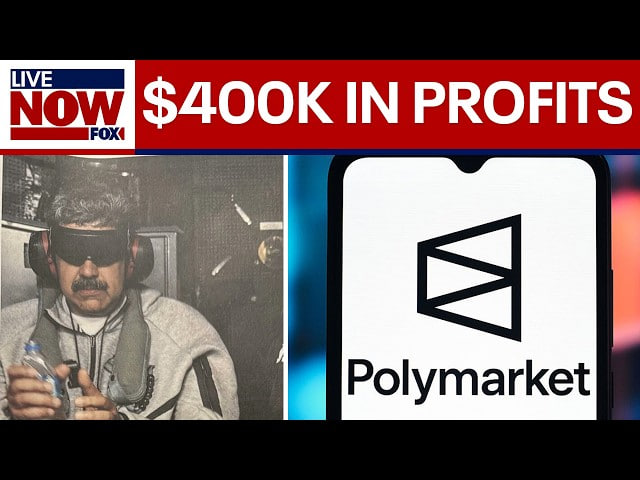
On April 23, 2026, a US Army soldier with access to classified briefings on a covert operation against Nicolás Maduro walked up to a crypto prediction market called Polymarket and quietly placed a series of bets. He won more than $400,000. A week later, federal agents knocked on his door.
Not because of the money — because of the account.
He thought he had separated his two lives: the one with a security clearance and the one with a trading wallet. He hadn’t. Somewhere in that chain — an email reused, a phone number shared with a normal app, an IP address that overlapped with a base network — there was a single thread. Investigators pulled it. The legend unraveled.
This is not a story about Polymarket or about Maduro. It’s a story about a mistake that almost every person reading this makes every single day — just without the FBI noticing.
The Oldest Rule of Spycraft Is the First Thing Normal People Break
Intelligence services have a word for what the soldier failed to do: compartmentation. In tradecraft, a cover identity — a “legend” — and a true identity must never share a single identifier. Not a habit. Not a tailor. Not a phone number.
The CIA’s Moscow Rules, declassified in fragments and documented by former officer Antonio Mendez, compress this into a single maxim that has been repeated in every serious OPSEC training since the Cold War: assume everything is connected. The practical corollary is that if you let two identities share any infrastructure — any at all — someone with enough time and motivation will find the bridge.
The clearest modern case study is not from a spy novel. In 1994, Aldrich Ames — a senior CIA officer and one of the most damaging KGB moles in American intelligence history — was exposed not through a surveillance breakthrough in the field, not through a defector’s tip, but through unexplained bank deposits linked to his real, undisguised identity. His tradecraft in the field was careful. His financial compartmentation was not. The US Senate Select Committee on Intelligence’s assessment of the Ames case identified this failure explicitly: the operational and the personal had been allowed to touch through a shared financial signature.
The Polymarket soldier broke the same rule in a modern form. He let his operational profile — the betting account — and his personal profile — the real human with a clearance — touch through shared infrastructure. One identifier was all it took.
In 2026, your phone number is your passport, your fingerprint, and your luggage tag simultaneously. If you hand the same one to every counter, someone will eventually connect the flights.
Sources
- US Senate Select Committee on Intelligence, An Assessment of the Aldrich H. Ames Espionage Case (1994) — on the role of financial compartmentation failure in the Ames exposure.
- Antonio Mendez, The Moscow Rules (PublicAffairs, 2019) — on the CIA’s foundational OPSEC maxims and their continued relevance.
Why the Phone Number Became the Master Key of Your Digital Life
The phone number’s rise to primacy as a digital identifier was not planned. No standards body voted on it. No legislature approved it. It happened through accumulated product decisions made by individual companies between roughly 2009 and 2016, each of which found that asking for a phone number was a frictionless way to verify that a new account was attached to a real human being.
The result is a stack that most people have never examined as a whole:
- Banks use SMS as a second authentication factor — your number is bound to your money.
- Social networks use it as “human proof” during suspicious login attempts — your number is bound to your identity.
- Crypto exchanges bind it to KYC documentation — your number is bound to your financial history.
- Dating apps bind it to your face through photo verification — your number is bound to your appearance.
- Loyalty programs sell it to data brokers — your number is bound to your purchasing behavior.
- Ad networks hash it and join it across platforms — your number is bound to every other number in the pile.
The scale of what sits at the end of this stack is not abstract. Have I Been Pwned — the reference breach-tracking database run by Troy Hunt — indexes over 12 billion compromised accounts as of 2025. Phone numbers are one of the fastest-growing leaked data categories since 2021, appearing in major breaches including 533 million Facebook records in 2021, over 200 million Twitter records in 2022, and 73 million AT&T records in 2024.
There is a subtler problem that runs beneath the breach statistics. A 2019 Princeton study found that approximately 35 million US mobile numbers are recycled by carriers each year. The “new” number a subscriber receives after porting or upgrading very likely still points — in dormant accounts, in password-reset flows, in autofill databases — to someone else’s old Amazon, Facebook, or bank profile. The identifier outlives the person it was assigned to.
Every new service you sign up for is one more copy of the same number in one more breach pile. You do not have one digital identity. You have dozens of overlapping ones, all welded together through a single seven-to-fifteen-digit string.
Sources
- Troy Hunt / haveibeenpwned.com public statistics (2025) — on breach scale and the growth of phone number as a leaked field.
- Lee & Narayanan, Princeton CITP, Empirical Measurement of Systemic Phone Number Reuse (2019) — on the approximately 35 million recycled US mobile numbers per year.
- US Federal Trade Commission, Data Brokers: A Call for Transparency and Accountability (2014, with subsequent updates) — on phone number as a primary join key in broker datasets.
The Polymarket Soldier’s Real Mistake — and Why Everyone Watching Just Made the Same One
According to Axios’s April 23, 2026 report, a US Army soldier was arrested after allegedly using classified information about a US operation against Nicolás Maduro to place bets on Polymarket, winning upwards of $400,000 before his trading activity was linked back to his identity.
The investigation itself is not yet fully public. But the mechanism that makes this kind of deanonymization possible is well-documented. Chainalysis and independent blockchain researchers — including the analyst known as ZachXBT — have repeatedly demonstrated that pseudonymous crypto accounts on platforms requiring SMS verification can be deanonymized within hours once a single real-world datapoint is found. The most common bridge: a phone number used for onboarding that also appears in a data broker file, a social media account, or a previous breach.
The soldier’s error was not that he placed the bets. It was that his operational identity and his personal identity shared infrastructure. One phone number. One email address. One IP subnet. That single overlap was enough for investigators who knew what to look for.
Now consider the reader who is not a soldier. A concrete, ordinary scenario: a user discovers their number on BreachForums next to their email address, their city, and their carrier — the complete join key needed to begin aggregating a profile. They never sold the number. They gave it, once, to a coupon site. The coupon site was acquired, and the acquirer’s third-party data-sharing agreement was buried in a terms-of-service update no one read.
The soldier and the coupon-site user differ by three orders of magnitude in stakes. They do not differ in mechanism. One identifier, many profiles, one day someone pulls the thread.
“I have nothing to hide” is a claim about today — not about 2031, when that same number is joined with a diagnosis, a political donation, a financial application, or a divorce.
Sources
- Axios, US soldier arrested over Maduro Polymarket bet (April 23, 2026) — on the arrest and the betting activity.
- Chainalysis, Crypto Crime Report (2024); ZachXBT independent research — on SMS-based deanonymization of pseudonymous crypto accounts.
Compartmentation Is Not Paranoia. It’s Hygiene.
The word “compartmentation” carries the weight of its origins — Cold War safe houses, dead drops, need-to-know clearances. It sounds like something that belongs to intelligence officers or investigative journalists working in authoritarian countries. It does not sound like something a person buying a vacuum cleaner on the internet should care about.
But consider who already practices it, and why:
Journalists are the most visible example. The Committee to Protect Journalists’ Digital Safety Kit — updated in 2023 — explicitly recommends that reporters use separate, disposable phone numbers for source contact and undercover accounts. The justification is not operational glamour. It is that a shared personal number has, in documented cases, led to source identification in authoritarian countries. The recommendation exists because the alternative is getting people killed.
Doctors practice it through legal compulsion. HIPAA exists because the act of joining patient data to identity is itself the harm — regardless of what anyone does with the joined record afterward. The law recognized, decades before the smartphone, that linkage is a form of exposure.
Divorce lawyers practice it as first-response advice. The first thing a client leaving a controlling or abusive partner is told — before the paperwork, before the court dates — is to get a new phone number. Not because the old one is compromised in a technical sense. Because the old one is a thread the other party holds.
The principle scales down from these high-stakes contexts to the ordinary texture of 2026 life. Every new AI assistant integration, every loyalty program, every marketplace onboarding asks for the same number that your bank texts you verification codes to. One breach in that chain — and statistically, within 24 months of any given service launch, there will be one — creates a join between the AI tool’s data and your financial identity. You did not consent to that join. You just filled in a field.
The emerging hygiene rule is simple: one number for humans who already know you — your family, your doctor, your bank. Separate numbers for services that only need to text you a six-digit code. Not because the service is malicious. Because the service will eventually be breached, acquired, or subject to a policy change you will not read.
Sources
- Committee to Protect Journalists, Digital Safety Kit (2023 revision), cpj.org/safety — on the recommendation of disposable numbers for source communication.
- Reuters, Personal data of 533 million Facebook users leaks online (April 3, 2021) — on the scale of the Facebook phone number leak and the contact-import mechanism that produced it.
The Practical Toolkit: How to Actually Compartmentalize Without Becoming a Hermit
The goal is not perfect anonymity. Security researcher and author Bruce Schneier put the correct framing in Data and Goliath (2015): the right defensive posture for ordinary people is not to make aggregation impossible, but to make it expensive. Raise the cost of connecting your profiles. Make the graph harder to traverse. That principle has only grown more relevant in the decade since.
Practically, this means tiering your digital life into three categories and matching each to the right instrument.
Tier 1 — Identity tier
Your bank. Your government accounts. Your employer’s systems. Your close family. Give these your real phone number. Protect it like a passport. Do not give it to any service outside this tier under any circumstances. This number should appear in as few breach piles as possible, because a breach here means a breach of your financial and legal identity.
Tier 2 — Durable tier
Services you rely on for months or years: a marketplace seller account, a long-running dating profile, a crypto exchange, a freelance platform. These need a stable number — one that will still receive re-verification SMS in three months — but they have no business touching your Tier 1 identity. A rented virtual number, valid for 30 to 90 days, is the right instrument here. It is stable enough to function as a real secondary number. It is separate enough that a breach does not touch Tier 1. A few concrete examples of where this matters: the seller on a peer-to-peer marketplace who listed a phone with their real number and received weeks of spam calls from resellers and scammers; the freelance developer building a separate professional brand; the Binance user who discovered their home country’s numbers are blocked and needed a verifiable alternative.
Tier 3 — Disposable tier
Every coupon site. Every new AI tool you are trying for the first time. Every “just checking it out” signup. A one-time virtual activation for $0.05 costs less than the coffee you will drink while regretting you gave your real number. Use it once, receive the verification code, discard it. The number goes into a breach pile that resolves to nothing. This is not a new behavior — businesses have used P.O. boxes, corporate switchboards, and proxy addresses for exactly this purpose for decades. The infrastructure is now $0.05 and one click away rather than a trip to the post office.
The platforms that make this practical in 2026 are those with transparent public pricing, API access for developers, coverage across 200+ countries and 1,000+ services, and — critically — a stated legal structure as a registered company operating under lawful interception protocols. The distinction between a legitimate virtual number provider and a gray-market service matters: legitimate providers do not advertise KYC circumvention; they provide the same infrastructure that journalists, QA engineers, and privacy-conscious consumers have used for years. Much mainstream coverage conflates the two. The Electronic Frontier Foundation’s Surveillance Self-Defense guide draws the distinction clearly.
Sources
- Bruce Schneier, Data and Goliath: The Hidden Battles to Collect Your Data (W. W. Norton, 2015) — on strategic compartmentation as the correct civilian defensive posture.
- Electronic Frontier Foundation, Surveillance Self-Defense guide (2023 revision) — on the legal distinction between legitimate virtual number services and KYC-circumvention tools.
What the Soldier Couldn’t Buy for $400,000 That You Can Buy for Five Cents
The soldier had money, training, and access to information that most people will never see. He still got caught, because his operational identity and his personal identity shared a single piece of infrastructure. The knot that unraveled his $400,000 was probably a phone number — the same kind of phone number you handed to a loyalty program last week without a second thought.
The ordinary reader has none of his resources. They also have something he didn’t: they have not yet done anything interesting enough to be investigated. That is the only thing standing between their breach pile and a knock on the door. It is not a durable protection. Breach piles grow. Data broker joins get cheaper every year. The joins that matter in five years are being assembled from data collected today.
The cost of changing this asymmetry is not a career and $400,000. It is five cents per throwaway signup and a habit that takes about thirty seconds to acquire.
Privacy is not about having something to hide. It is about choosing who gets to ask the question, and in what order. The soldier lost that choice at the moment his two identities shared a number. You still have it — but the window for making the choice before it is made for you is not unlimited.
Conclusion: Everyone Is Running the Same Experiment
The tabloid version of this story is: soldier gets greedy, gets caught. The useful version is: every one of us is running the same experiment the soldier ran, just without a classified briefing to bet on.
Every time you hand your real phone number to a loyalty app, an AI tool, a dating profile, or a marketplace, you are welding two identities together that have no business meeting. The day one of those services gets breached — and statistically, within 24 months it will — someone pulls the thread. Maybe nothing happens. Maybe you get a few more spam calls. Maybe, one day, the pull is harder.
Compartmentation used to be a skill reserved for case officers and investigative reporters. In 2026, it is a life skill — closer to locking your front door than to spy tradecraft. You do not lock the door because you expect burglars tonight. You lock it because it costs nothing and the asymmetry is absurd.
The Next Step Is One Signup
If this piece made you look at your own phone number differently, the practical next step is simple: pick one signup this week — a coupon site, a new AI tool, a marketplace listing — and try getting through it without handing over your real number.
SMStoProxy offers throwaway numbers from $0.05 for one-time activations and rented numbers for durable-tier projects, across 200+ countries and 1,000+ services. No SIM card. No account with your carrier. No new thread for someone to pull. Start with one. See how it feels.